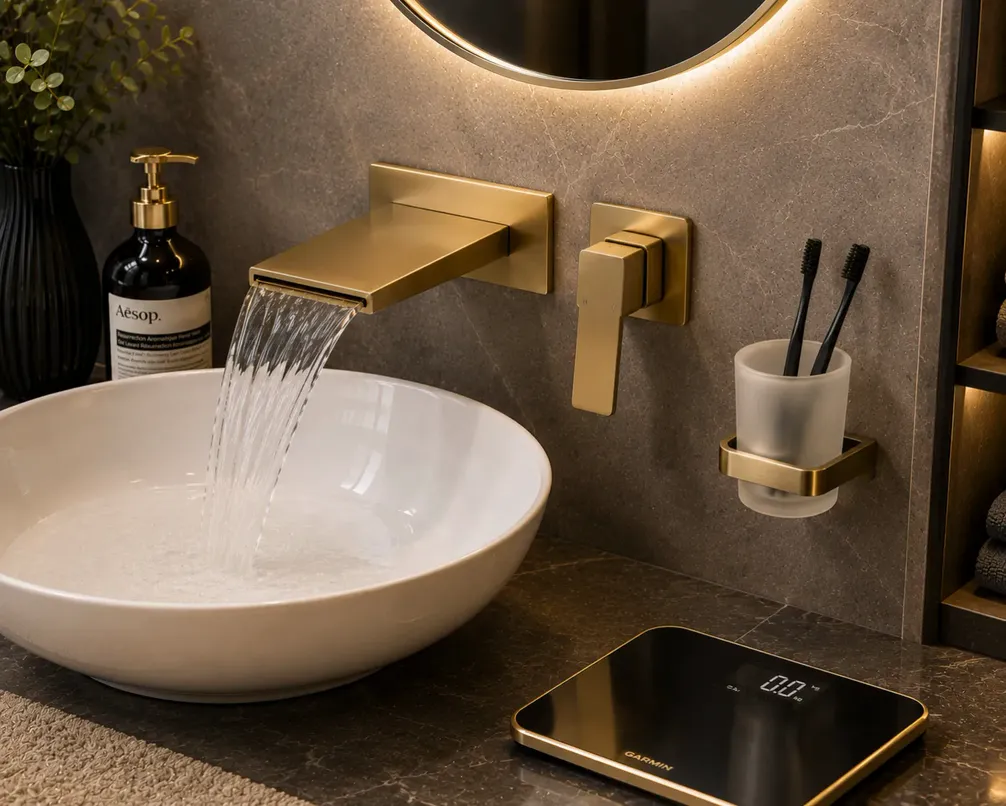
Caring for PVD-Coated Surfaces: Cleaning & Long-Term Maintenance
PVD needs less care than most finishes — but the little it needs matters. What to use, what to avoid, and how to keep the finish as-installed for years.
The good news first
PVD is one of the lowest-maintenance decorative finishes there is. It does not tarnish, so there is no polishing schedule. It does not fade, so there is no rotation of parts away from sunlight. Routine care is genuinely simple — the goal of this guide is mostly to stop well-meaning cleaning from doing what daily use cannot.
Routine cleaning
- Wipe with a soft, damp cloth — microfibre is ideal.
- For grease or grime, use mild soap in warm water, then rinse with clean water and dry with a soft cloth.
- Dry rather than air-dry in hard-water areas, so mineral spots never get a chance to build.
What to avoid
- Abrasives: scouring pads, steel wool, and abrasive cream cleansers. The coating is hard, but abrasives can dull any polished texture over time.
- Harsh chemistry: bleach, drain-strength acids, chlorine-heavy bathroom cleaners and solvent thinners. Wipe off splashes promptly if they happen.
- Metal polishes: they exist to remove tarnish PVD does not produce, and their abrasives do nothing good here.
Exterior surfaces
Gates, railings and facade metalwork mostly look after themselves in rain. A seasonal wash with soapy water and a rinse — more often in coastal or high-dust environments — keeps deposits from accumulating and is all the programme most installations need.
If damage happens
A PVD layer does not peel, so damage stays local: a deep scratch from a sharp impact does not spread or lift the surrounding finish. For significant mechanical damage on a visible surface, re-coating the component is usually the clean remedy — contact us and we will advise on the specific part.